
Varnox Ale House Journal Varnox Ale House Journal · Seattle
Snowy brick ale house storefront at night, warm window light across wet pavement

Neighborhood journal · Seattle · updated October 2026

Neighborhood dining, one repeat visit at a time

Miller's Ale House calls itself a neighborhood restaurant and sports bar. That is a testable claim, so we test it: same location, different weeknights, no game on, seeing whether the place still works when it is not a big event.

Visit log Weeknight, no game on Table of four Same location, two visits

Why the wording matters

A chain calling itself a neighborhood restaurant

A chain with 113 U.S. locations has a local-recognition problem by default. Calling itself a neighborhood restaurant softens the chain feel and borrows the familiarity of a place you already know. It is positioning language, and it either matches the experience or it does not. We write about the gap between the two, and we say which location we mean when a habit is local rather than brand policy.

That wording is also why the reading here is different from a destination review. A place you go to once gets judged on the one loudest thing it does. A place you go back to gets judged on everything that has to hold up quietly: whether the fries land the same way on a Tuesday, whether a server remembers the table, whether the room is comfortable when nothing is happening.

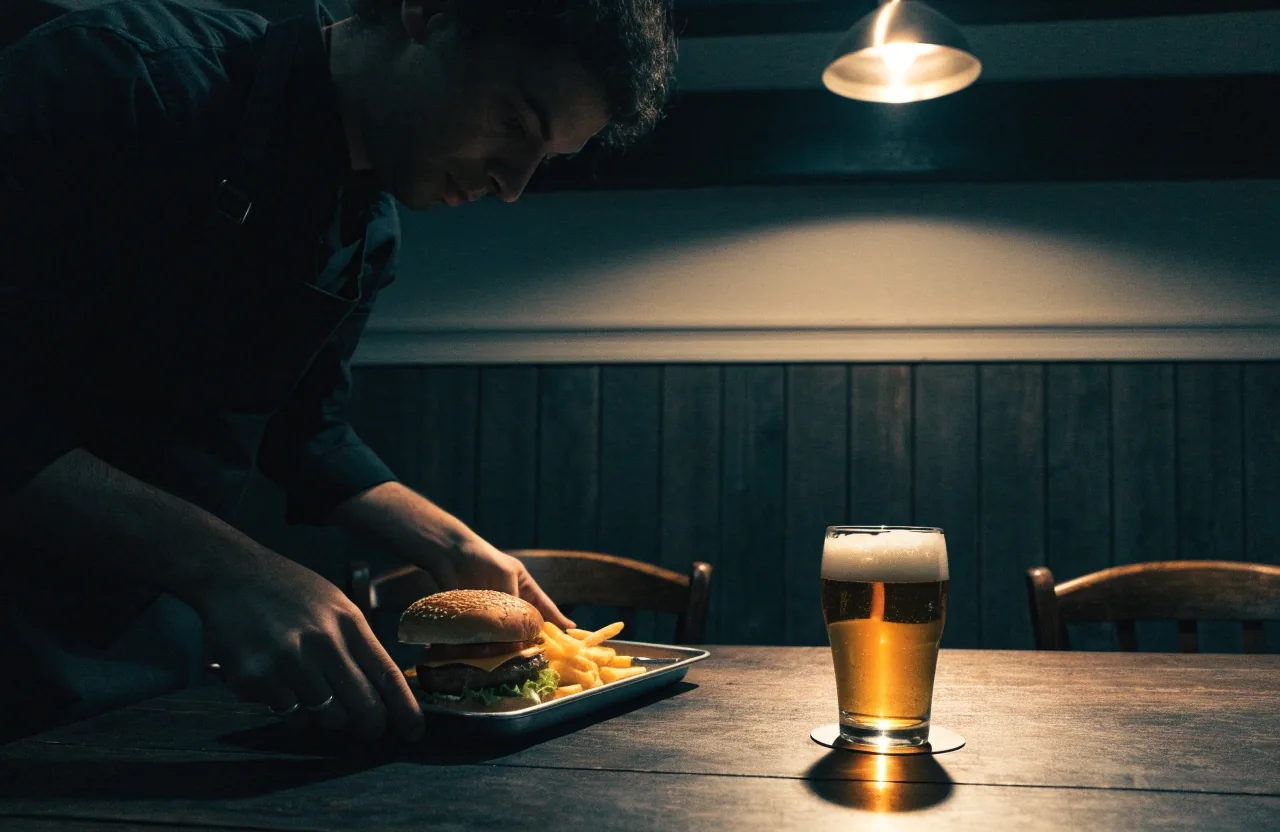
Burger and fries on a metal tray with a pint glass at a quiet weeknight bar table
Tuesday, burger-and-fries combo

The weeknight test

What a Tuesday dinner tells you

A Tuesday dinner tells you more about a casual-dining room than a Saturday ever will. On a weeknight there is no crowd to hide behind, no game to explain the volume, and no reason for the kitchen to rush. If the burger-and-fries combo still lands, the fries are still the same cut, and the Zingers® still hold their texture, the neighborhood claim has something behind it. If not, the room is only borrowing the word.

The order you stop thinking about

Repeat order

Kitchen timing when the room is quiet

Slow night

Whether the second visit matches the first

Week two

None of this is a rating. We are not scoring out of ten. We compare our own notes across visits at the same Miller's Ale House and describe what held and what did not.

Lunch, dinner, late-night, and who shows up

Three different restaurants share one menu. A neighborhood restaurant has to serve all three without feeling like three different businesses, and that is the hard part.

Lunch, quick and solo-friendly

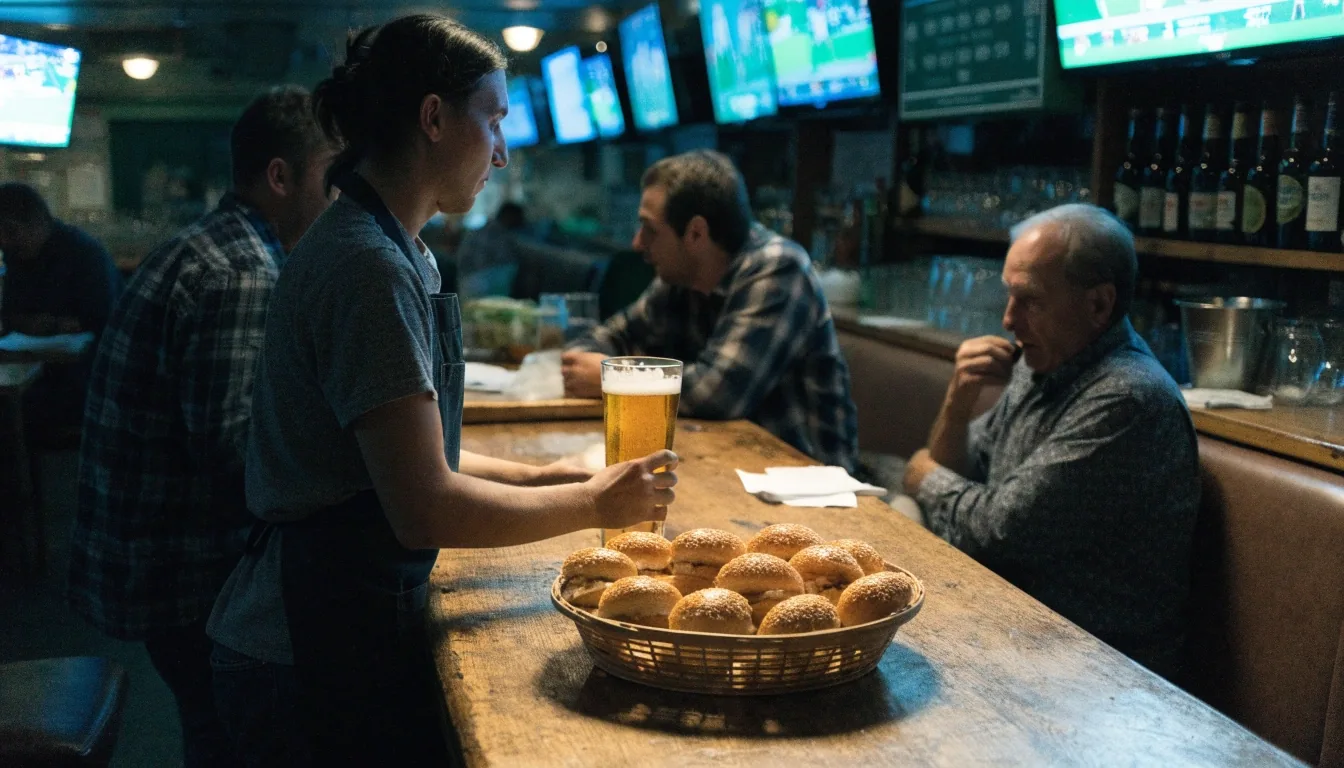
The dining room reads more like a diner at noon: solo tables, a short wait, and the burger-and-fries combo behaving as the safest order. A 16 oz. pint is the usual pour at this hour because most people here are heading back out, not settling in. This is the visit where the neighborhood wording feels most like ordinary lunch in a neighborhood rather than a destination room.

Weekday noon · 1–2 people
Dinner and the group table

Dinner is when the menu opens up and an entrée such as the Osso Buco stops feeling out of place in a sports bar. Groups of four to six order across categories: a shareable starter, Zingers® in platter form, and a plate that reads more like a real dinner. Mocktails start earning their place here too, since not everyone at the table is drinking.

Weeknight 6–8 pm · 4–6 people

Late-night and bar bites

After nine, the same menu reads differently. Bar bites and shareable starters beat a full entrée, and the 23 oz. pour starts to make more sense than the pint. The crowd is smaller and more regular, which is the reading that matters most for a place claiming to be a local.

After 9 pm · solo to three

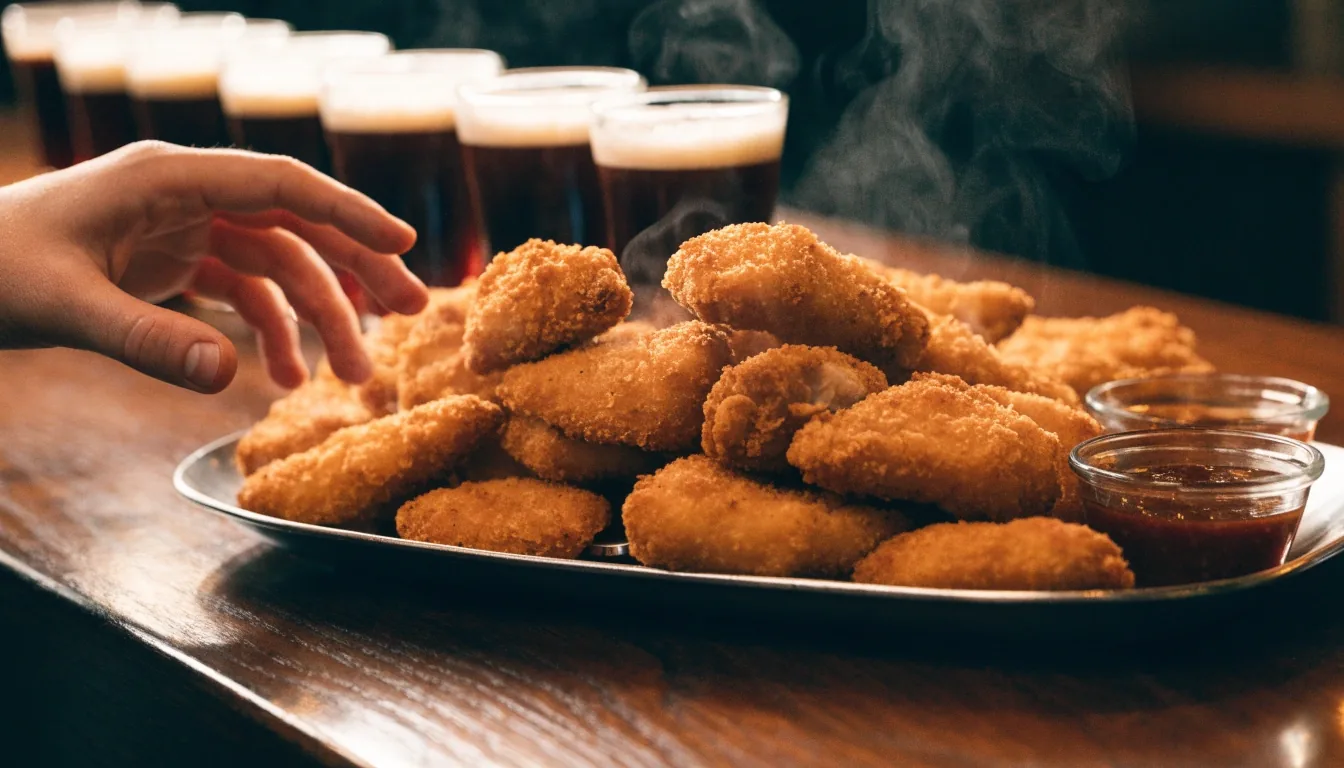
Shareable platter of crispy boneless chicken with dipping sauces on a dark wood bar counter

Shareable starter before the entrées land

Family-friendly in practice

Group dining and mocktails point at a family-friendly room, which is not the default expectation people bring to a sports bar. In practice, the noise level is the deciding factor, not the menu. Early dinner works: an Osso Buco at 6 pm with a table of six, a mocktail for the person driving home, and something shareable to keep younger guests busy before the entrées arrive. A playoff night does not work the same way. When we describe a visit, we name which of the two we mean, because the difference is the whole point.

The repeat order is the honest version of a menu review. For some people, it is a 16 oz. pint and a shareable appetizer. For others, it is Zingers® in a wrap, every single time. We keep notes on what we stopped having to decide, because that is what a neighborhood regular actually orders.

6 pm group table Mocktail in the round Zingers® in a wrap

Seattle reading a Florida chain

Where the neighborhood claim breaks

Miller's Ale House is Florida-based, and we are writing from Seattle, where restaurant density is different and the competition for a neighborhood slot is severe. What reads as a comfortable local in one market can read as a chain in another. That gap is worth describing rather than smoothing over.

Scale 113 U.S. locations A national footprint still has to behave like a local to earn a third visit.
Menu Changes by location and season A dish that reads one way in Seattle can land another way two time zones over.
Taps 35+ beers, 16 oz. and 23 oz. Which of the 35+ are actually pouring on a given night is the honest question.
Hours Late-night stays late The later the hour, the smaller the crowd and the more regular it feels.

A menu that changes by location, staff who do not recognize anyone, and prices that drift are the friction points. None of these are scandals; they are what a chain is. The neighborhood framing survives them only if the room itself feels like somewhere you would go without a reason. That is the standard we hold each visit to.

The real test

Late-night is where the claim holds or breaks

Late-night is when a neighborhood restaurant either becomes a local fixture or reveals itself as a daytime operation. The menu stays available, bar bites become the sensible order, and the crowd is smaller and more regular. If you want to know whether the neighborhood claim holds, go at 10 pm on a Wednesday. That is the visit that tells you whether you will be back on a random Tuesday three months from now.

Weeknight dinnerRepeat
Weekend kickoffEvent
Late-night, midweekThe test

The three visits we compare most often; the first and last tell us whether the neighborhood wording holds up. Hours and this location's schedule belong with the location itself, not with us.

Questions the repeat visits raise

Short answers, based on what we can observe at a Miller's Ale House. Longer answers are on the field notes and game-day pages.

What should I order first at Miller's Ale House?

If you have never been, start with Zingers®, since the chain treats it as a signature item and serves it in several formats. Pair it with a burger-and-fries combo if you are splitting, or a 16 oz. draft pour if you are not.

Is Miller's Ale House good for watching the game?

The brand positions itself as a place to watch the game, and its location pages mention catching the big game. Whether a specific visit works depends on timing and seating, which is what our game-day guide covers.

Does the menu have more than burgers and wings?

Yes. Steaks, chicken, salads, and seafood all appear, and an Osso Buco entrée comes up in traveler reviews. That is a wider spread than the sports-bar stereotype suggests.

Is it better for lunch, dinner, or late-night dining?

All three are viable, but the room behaves differently at each. Late-night leans on bar bites and draft pours, while dinner is when entrées like Osso Buco make more sense for a group.

How strong is the beer selection?

The chain promotes 35+ beers on tap, spanning domestic favorites, crafts, and imports, with 16 oz. pints and 23 oz. pours. That is a serious tap program by casual-dining standards.

What these notes leave out

We do not rank every item on a numbered list and call it journalism. We do not recycle press releases as reviews, and we do not pretend a single visit settles a question about a menu that changes by location and season. Where we are unsure, the copy says so. The editorial standards page spells out corrections, sourcing, and what happens when a reader tells us we are wrong.

Getting in touch

Tips, corrections, and questions

A short message with the location and the date is more useful to us than a long one without either. If a dish came out differently than our notes describe, say which format you ordered it in. Varnox is an independent journal and holds no operational role at any Miller's Ale House location, so reservations, order status, and refunds belong with the location itself.

1506 Melrose Ave, Seattle, WA 98122, USA

Monday to Friday, 9:00 AM – 6:00 PM

Reach the journal